Gaza's Water Crisis: Facts, Figures, and Urgent Needs
Gaza's water system has been severely damaged, leaving millions of people without reliable access to enough safe water. Here are the latest figures, why water remains difficult to access, and how Al-Ihsan Foundation is responding.
Al-Ihsan Foundation
Humanitarian Research Team
Key Takeaways
- 91% of assessed households face moderate-to-high water insecurity
- Around 75% of Gaza's population relies on water trucking as their main source of drinking water
- All six wastewater treatment plants are currently out of operation
- 70% of sewage pumping stations are out of service
- More than 150,000 m³ of untreated wastewater is discharged into the environment each day
The Reality on the Ground
Key Statistics September 2026
| Indicator | Current Situation |
|---|---|
| Water Insecurity | 91% of assessed households face moderate-to-high water insecurity |
| Reliance on Water Trucks | Around 75% of Gaza's population relies on water trucking as its primary source of drinking water |
| Daily Drinking Water Access | 63% of assessed households access less than 6 litres per person per day |
| Water & Sanitation Infrastructure | Nearly 90% damaged or destroyed |
| Wastewater Treatment | All 6 wastewater treatment plants are non-operational |
| Sewage Pumping | 70% of sewage pumping stations are out of service |
| Untreated Wastewater | More than 150,000 m³ discharged into the environment each day |
What Is Causing Gaza's Water Crisis?
Gaza's water system was already under severe pressure before October 2023. Since then, widespread destruction and the ongoing blockade have made it increasingly difficult to produce, treat and deliver enough safe water.
- •Water infrastructure has been damaged and destroyed. Nearly 90% of Gaza's water and sanitation infrastructure has been damaged or destroyed, including wells, desalination facilities, pipelines and sewage systems.
- •Water systems lack essential supplies. Electricity, fuel, engine oil, spare parts and equipment are needed to pump, treat and distribute water. Severe shortages continue to disrupt these services.
- •The blockade restricts supplies needed to operate and repair the system. Engine oil, spare parts, equipment and other essential materials continue to face restrictions and delays entering Gaza. OCHA reported in September 2026 that denials and delays in Israeli approvals were threatening generator-dependent water and sanitation services.
The result is not simply less water. Even when water is available, it still needs to be treated, pumped and delivered to people.
UN human rights experts have also raised concerns about what they describe as the deliberate and systematic obstruction of Palestinians' access to safe drinking water, alongside widespread destruction of Gaza's water and sanitation infrastructure.
Sources: UN OCHA, September 2026; UN Human Rights Council Special Procedures, June 2025
How is the Water Crisis Affecting Families?
Think about how many times we use water without thinking about it.
We turn on the tap for a drink, fill a pot to cook dinner, wash our hands, rinse a plate, bathe our children or flush the toilet. These are ordinary parts of our day.
For families in Gaza, every litre has to be considered.
In a 2026 assessment, 63% of assessed households were accessing less than six litres of drinking water per person per day.
Our teams on the ground tell us that families are having to think carefully about how they use the water they can access. Even preparing a meal can mean considering how much water is needed to cook it and how many dishes will need washing afterwards. Some families limit how often they flush the toilet simply to make their water last longer.
But there are some things families cannot cut back on. Children still need to drink. Meals still need to be prepared. Someone who is sick still needs care.
These are things many of us rarely have to plan.
For families struggling with severe water shortages, even cooking dinner, washing clothes or bathing a child can become a calculation.
Families can reduce how much water they use. They cannot remove the need for it.
Why Does Gaza Rely on Water Trucks?
For most of us, getting a glass of water begins at the tap. For many families in Gaza, it now begins with finding somewhere to collect it.
Gaza's water system has been so severely damaged that water can no longer reliably travel through the network to the homes, shelters and buildings where people need it. And getting water from its source to a family takes more than pipes. Wells and desalination plants need electricity or generators to operate. Pumps need power. Damaged networks need spare parts, equipment and people who can safely repair them.
When one part of that system stops working, water stops moving.
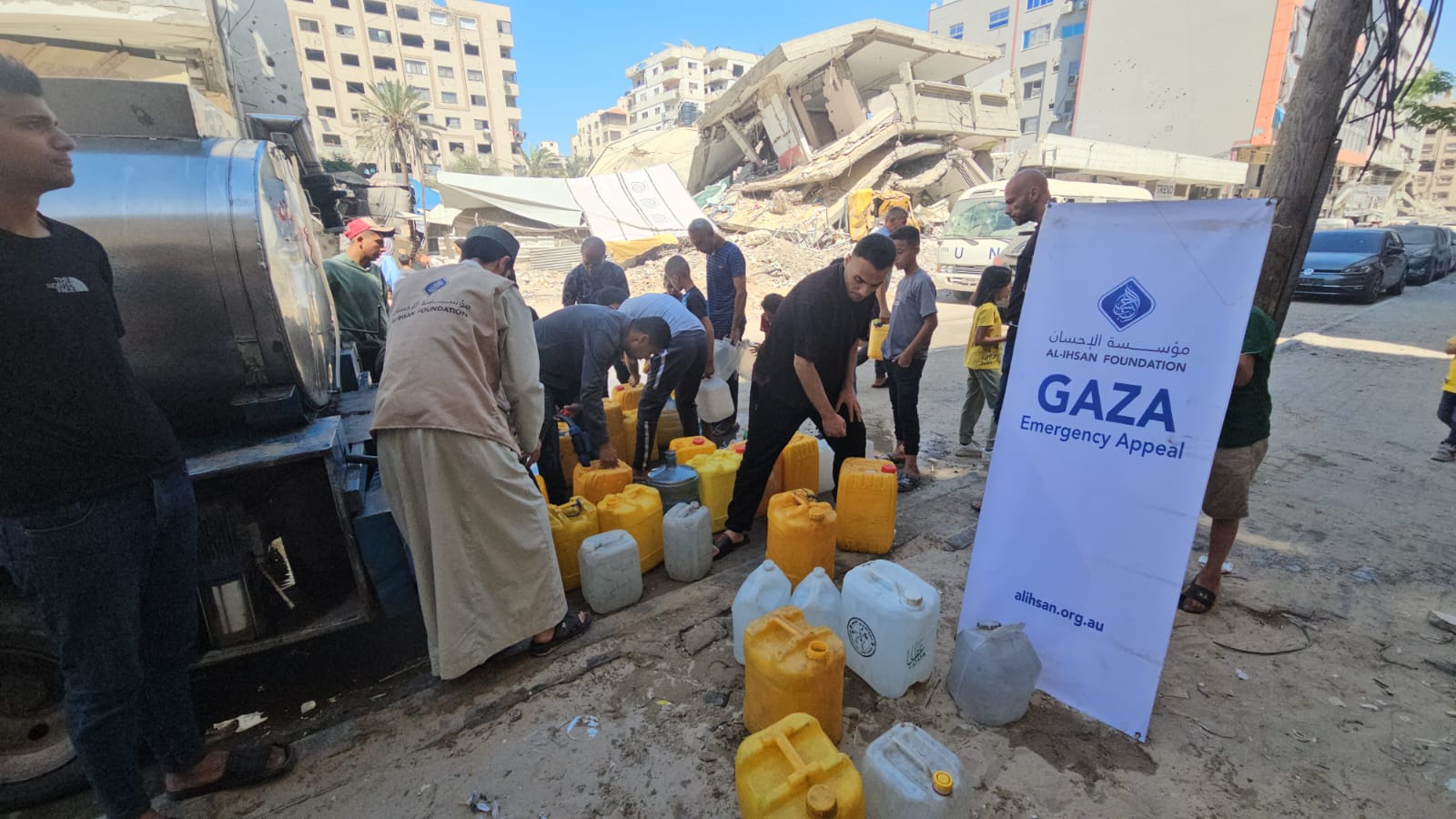
This is why water trucks have become such an important part of daily life. By the end of July 2026, around 75% of Gaza's population relied on water trucking as their main way of accessing drinking water.
Trucks collect water from functioning sources, including desalination facilities and filling points, and bring it closer to the communities that need it. Families can then collect the water in containers and carry it back to where they are staying.
Think about what that changes. Water for a drink, a meal, a child's bath or washing your hands first has to be collected and brought home.
While families cannot rely on water reaching them through a tap, trucks remain one way of bringing water within reach.
How Unsafe Water Affects Health
A water crisis is not only about how much water people can access. The water also needs to be safe.
In Gaza, all six wastewater treatment plants are non-operational and 70% of sewage pumping stations are out of service. More than 150,000 cubic metres of untreated wastewater is discharged into the environment every day, increasing public-health risks and the potential for further water contamination.
For many families, that risk is close to home.
A 2026 WASH assessment found that 60% of the population was exposed to sewage or human waste within 10 metres of shelters. When families are already living with limited water for washing, cleaning and basic hygiene, failing sanitation systems create another serious threat to their health.
Unsafe water and poor sanitation increase the risk of diseases including acute watery diarrhoea and Hepatitis A. Children can be particularly vulnerable to the effects of diarrhoeal disease.
And people are already getting sick.
Between 10 and 30 August 2026, acute watery diarrhoea accounted for 21% of reported communicable diseases in Gaza. Cases of acute jaundice syndrome also increased during August, with health teams investigating possible Hepatitis A transmission, including affected water sources in Gaza City.
Families need enough water to drink, cook and wash. They also need it to be safe.
Why Is Access to Safe Water a Human Right?
Water is essential to life.
Having enough clean water protects our health, dignity and ability to care for one another. It means being able to drink, prepare food, wash and maintain basic hygiene without travelling unreasonable distances or putting yourself at risk to collect it.
For many people in Gaza, this is far from their daily reality. Damaged infrastructure, displacement and restrictions on essential supplies have made accessing water a daily struggle.
No one should have to wonder whether there will be enough water to drink, or risk their safety to reach it.
Learn more about How Gaza's Water Crisis Is Affecting Children.
Help us keep water reaching families in Gaza.
Support our Gaza Water AppealFrequently Asked Questions About Gaza's Water Crisis
Why is there a water crisis in Gaza?
Gaza's water crisis is driven by widespread damage to water and sanitation infrastructure, limited electricity and fuel, and restrictions on the equipment and supplies needed to operate and repair water systems.
How do people in Gaza get drinking water?
Water comes from several sources, including desalination facilities, wells, limited piped networks and water trucking. Around 75% of the population relies on water trucking as its primary way of accessing drinking water.
Why are water trucks needed in Gaza?
For many people, the water network cannot reliably deliver water to where they are living. Trucks collect drinking water from functioning sources and bring it to communities where families can access it.
How much water are people in Gaza accessing?
A 2026 WASH assessment found that 63% of assessed households were accessing less than six litres of drinking water per person per day.
Is the water in Gaza safe to drink?
Not all available water is safe for drinking. Damage to water and sanitation systems, untreated wastewater and limited treatment capacity increase contamination risks. Drinking water needs to be properly treated and monitored for safety.
What are the health risks of unsafe water in Gaza?
Unsafe water and poor sanitation increase the risk of illnesses including acute watery diarrhoea and hepatitis A. Children are particularly vulnerable to the effects of diarrhoeal disease.
How is Al-Ihsan Foundation providing water in Gaza?
Al-Ihsan Foundation works with trusted teams on the ground to deliver water by truck to communities we can reach. $150 helps provide 1,000 litres of water.
Frequently Asked Questions
Stay Informed
Stay Connected and Inspire Change with Al-Ihsan
Stay connected, inspire meaningful change, and support compassionate community efforts through Al-Ihsan.